Synergy between human clinical expertise and artificial intelligence for better oral health care.
The Feher Lab at Harvard University works at the intersection of applied machine learning and dental medicine, advancing our understanding of oral diseases and contributing to personalized treatment approaches.
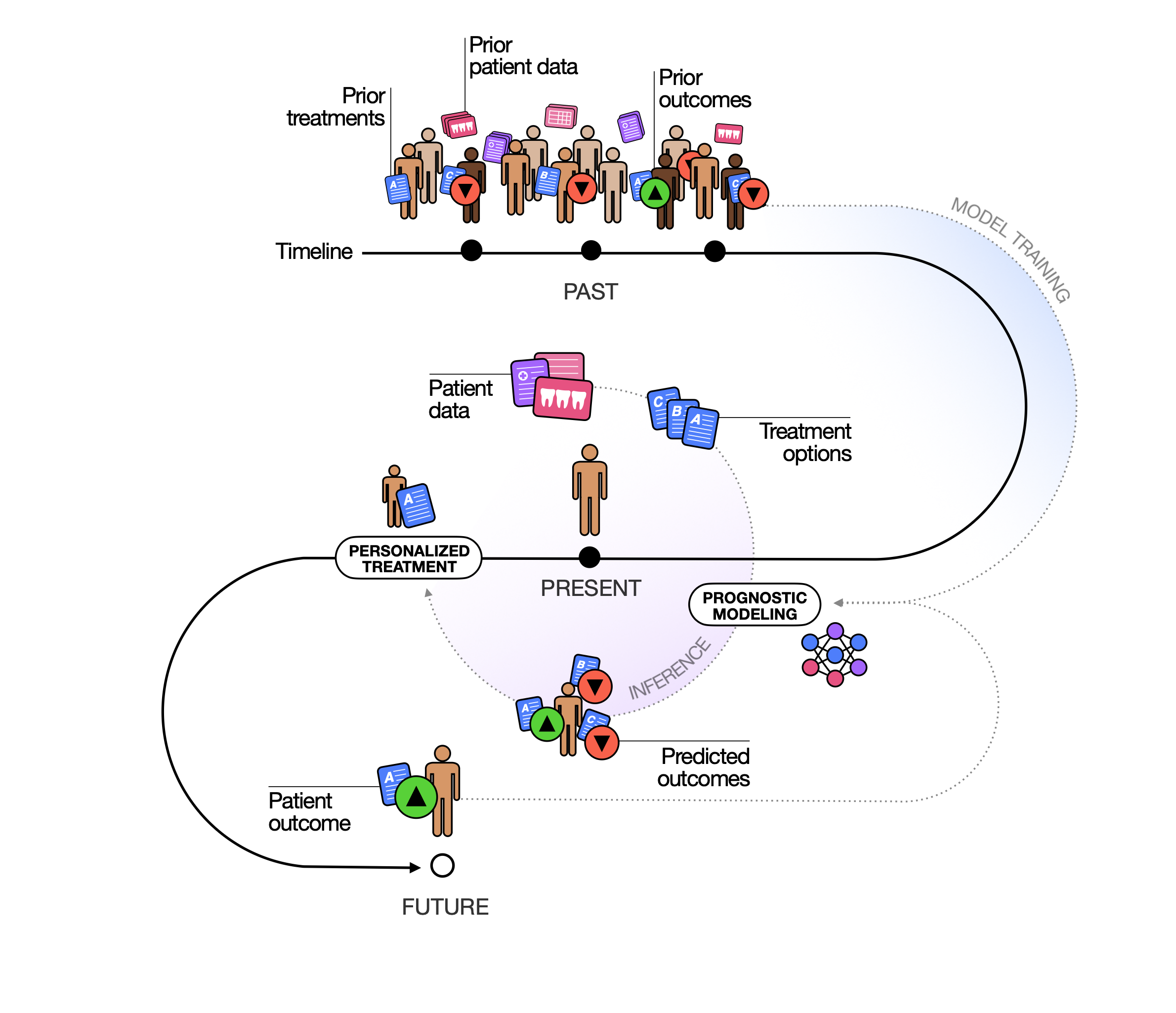
Precision oral healthcare using predictive machine learning
Most dental treatment is largely standardized, but individual outcomes can vary. Some patients experience disease progression despite adherence to recommended treatment protocols.
We use machine learning to develop predictive models for individual treatment outcomes based on data from previous clinical trials as well as real-world data from routine clinical care.
Our periodontal treatment model, developed in collaboration with the Feres Lab at Harvard, correctly predicts one-year outcomes from baseline features in at least three out of four patients with periodontitis.
Advancing clinical judgement with intelligent decision support
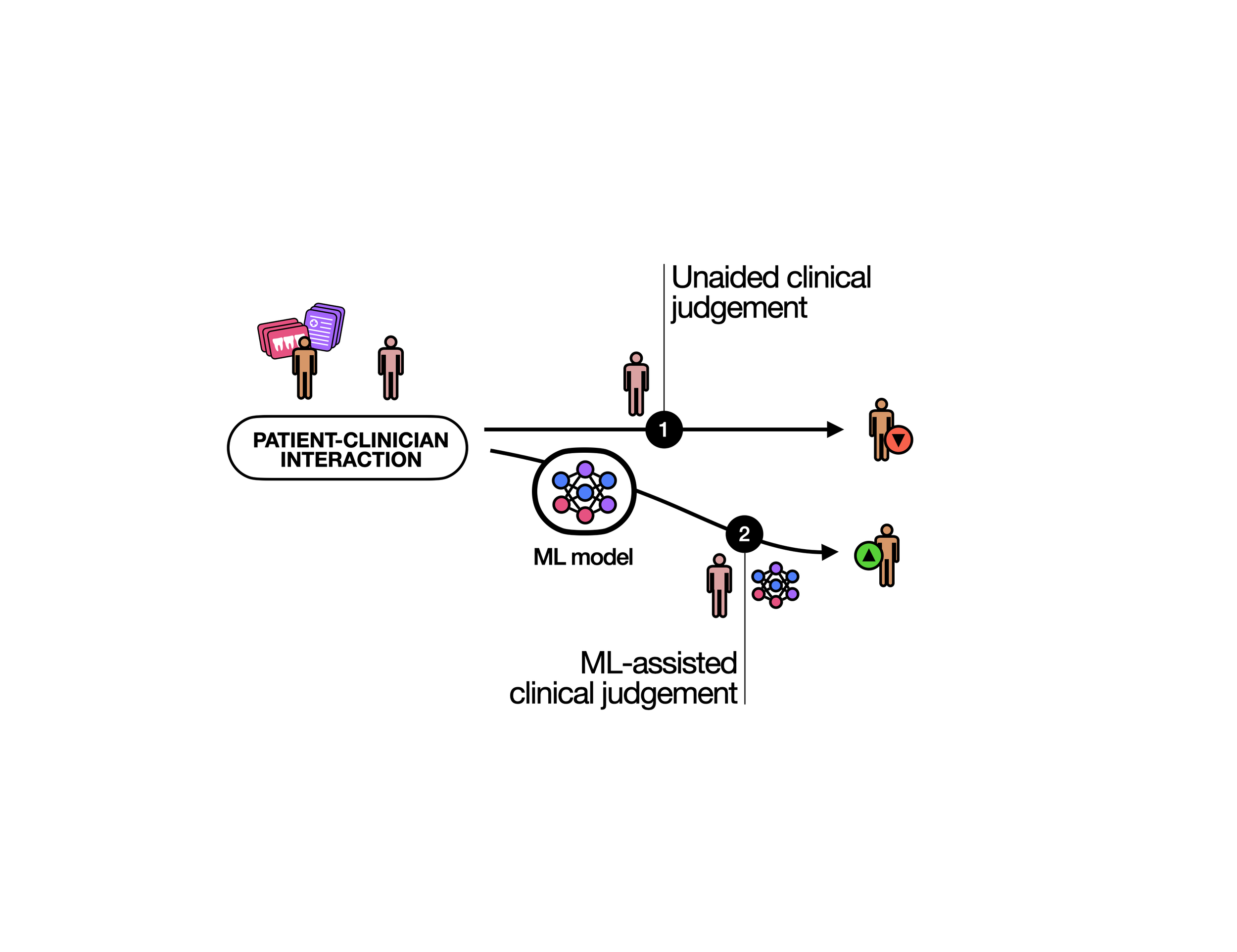
While applied machine learning in medicine is often developed and evaluated using statistical performance metrics, these measures do not tell us whether a model actually improves clinical decision-making.
We study how clinicians use predictive models in practice — and whether decision support can improve clinical reasoning, prognostic accuracy, and patient care.
Our preliminary data from one of the largest multi-reader, multi-case studies in dental medicine to date suggest that machine learning assistance reduces overconfidence in treatment success and helps identify future non-responders early.

“Artificial intelligence holds enormous potential for improving the health of millions of people around the world”
WHO Director-General Tedros Adhanom Ghebreyesus